The Quick Answer: Yes, but the timing and technique are everything. If you've just invested in a ceramic coating for your vehicle, you're probably wondering about the safest way to maintain that showroom shine. The good news? Pressure washing is not only safe for ceramic-coated vehicles; it's actually one of the best maintenance methods available. The catch? You need to understand the proper timing, pressure settings, and technique to protect your investment.
At
Olson's Custom Detailing Inc, we don't just apply world-class
ceramic coatings. We empower our clients with the knowledge to maintain them properly. This guide will walk you through everything you need to know about pressure washing your ceramic-coated car, from the critical curing window to the exact PSI settings that keep your coating intact for years to come.
The Waiting Game: When Is It Safe?
Understanding the curing process is essential to protecting your newly applied ceramic coating. While the coating may appear dry to the touch within hours, the chemical bonding process happens in stages.
The "No-Water" Rule: Why the First 24–48 Hours Are Critical
During the initial 24 to 48 hours after application, your ceramic coating is transitioning from a liquid to a semi-solid state. This is when the coating undergoes its primary chemical bonding with your vehicle's clear coat. Any exposure to water during this window can disrupt the molecular cross-linking process, potentially causing:
- Uneven curing patterns that create "high spots"
- Reduced hydrophobicity in affected areas
- Premature failure of the sacrificial layer protection
- Water spotting that becomes embedded in the partially cured coating
This is why Olson's Custom Detailing Inc. provides detailed aftercare instructions and schedules applications during favorable weather conditions. We want to eliminate any risk of rain or moisture exposure during this critical period.
The Full Cure Cycle: Why We Recommend Waiting 7 Days Before the First High-Pressure Wash
While light rain after 48 hours won't damage your coating, the complete cure cycle takes approximately 7 days. During this time, the ceramic coating continues to harden and develop its full chemical bonding strength. Think of it like concrete: it may be walkable in a day, but it reaches full structural integrity over weeks.
We recommend waiting the full 7 days before subjecting your coating to the mechanical abrasion forces of pressure washing. This patience pays dividends: a fully cured coating will deliver maximum durability, hydrophobicity, and resistance to environmental contaminants for years to come.
Why Pressure Washing is Actually Better for Your Coating
Here's something that surprises many of our clients: pressure washing is actually safer for ceramic coatings than traditional hand washing, when done correctly.
The Benefit of "Touchless" Cleaning
Ceramic coatings create an incredibly smooth, hydrophobic surface that causes water to bead up and roll off, taking dirt with it. This "lotus effect" means that a properly executed pressure wash can remove 70-80% of surface contaminants without any physical contact. This touchless approach is the gold standard for ceramic coating maintenance because it eliminates the primary cause of coating degradation: physical friction.
Reducing Swirl Marks by Removing Grit Before Physical Contact
Even the softest microfiber wash mitt can create micro-marring if you're dragging dirt particles across your paint. The beauty of pressure washing ceramic-coated vehicles is that you're performing a decontamination wash before any hand contact occurs. By removing loose dirt, road grime, and abrasive particles first, you're dramatically reducing the risk of introducing swirl marks during the contact wash phase.
The self-cleaning properties of Si02-infused coatings work synergistically with pressure washing. The coating's low surface tension allows water to penetrate beneath contaminants and lift them away from the surface with minimal force.
Professional Guidelines for Safe Pressure Washing
The difference between safely cleaning and damaging your ceramic coating comes down to three critical factors: pressure, nozzle selection, and distance.
PSI Settings: Keeping It Between 1,200 and 1,900 PSI
Pounds per square inch (PSI) measures the force of water hitting your vehicle's surface. For ceramic-coated cars, the sweet spot is between 1,200 and 1,900 PSI. This range provides enough force to dislodge contaminants without compromising the coating's integrity.
Why this specific range matters:
- Below 1,200 PSI: You'll struggle to remove caked-on dirt and may end up compensating with excessive chemical cleaners or physical agitation
- 1,200-1,900 PSI: The ideal balance that leverages the coating's hydrophobicity while respecting its surface tension
- Above 2,000 PSI: You risk forcing water under trim pieces, door seals, and in extreme cases, disrupting the mechanical bond between the coating and clear coat
At Olson's Custom Detailing Inc., we use commercial pressure washers with adjustable pressure controls, allowing us to dial in the perfect PSI for each vehicle's coating type and condition.
The Nozzle Choice: Why the 40-Degree (White) or 25-Degree (Green) Tip Is Your Best Friend
Pressure washer nozzles control the spray pattern and concentration of water pressure. The color-coding system is universal, and choosing the right tip is crucial:
- 40-degree (white) nozzle: Creates a wide, gentle fan pattern, perfect for the initial rinse and general washing of ceramic-coated vehicles
- 25-degree (green) nozzle: Offers a narrower pattern with slightly more concentrated force, ideal for removing stubborn contaminants from wheel wells and undercarriages
- 15-degree (yellow) nozzle: Too concentrated for painted surfaces; reserve for tires and extremely soiled wheel barrels only
- 0-degree (red) nozzle: Never use this on any part of your vehicle. This tip concentrates water into a laser-like stream that can cut through ceramic coatings, clear coat, and even paint.
The 40-degree white tip should be your default choice for 90% of washing tasks on ceramic-coated vehicles.
Safe Distance: Maintaining at Least 12–18 Inches from the Surface
Distance management is the third pillar of safe pressure washing. Even with the correct PSI and nozzle, holding the wand too close concentrates the force and can cause damage.
The 12–18 inch rule: This distance allows the water spray to fan out properly while still delivering effective cleaning power. As a visual reference, this is roughly the length from your elbow to your fingertips.
For heavily soiled areas, move closer gradually and observe the results rather than starting at close range. For delicate areas like emblems, mirrors, and trim, increase the distance to 24 inches.
The Proper 4-Step Wash Process for Coated Vehicles
Following a systematic approach ensures your ceramic coating remains in pristine condition while delivering that jaw-dropping shine after every wash.
Step 1: The Pre-Rinse: Using the Pressure Washer to Shed Loose Debris
Start at the top of your vehicle and work downward, using overlapping horizontal passes with your 40-degree white nozzle. This initial rinse serves multiple purposes:
- Removes loose dirt, dust, and light contaminants
- Pre-wets the surface, preparing it for foam application
- Flushes out wheel wells and undercarriage areas where heavy debris accumulates
Pay special attention to panel gaps, around fuel doors, and behind mirrors where dirt tends to hide. The hydrophobic nature of your ceramic coating will cause water to sheet off dramatically during this step. That's the coating doing its job.
Step 2: The Foam Cannon: Why Olson's Recommends a Thick Layer of pH-Neutral Snow Foam
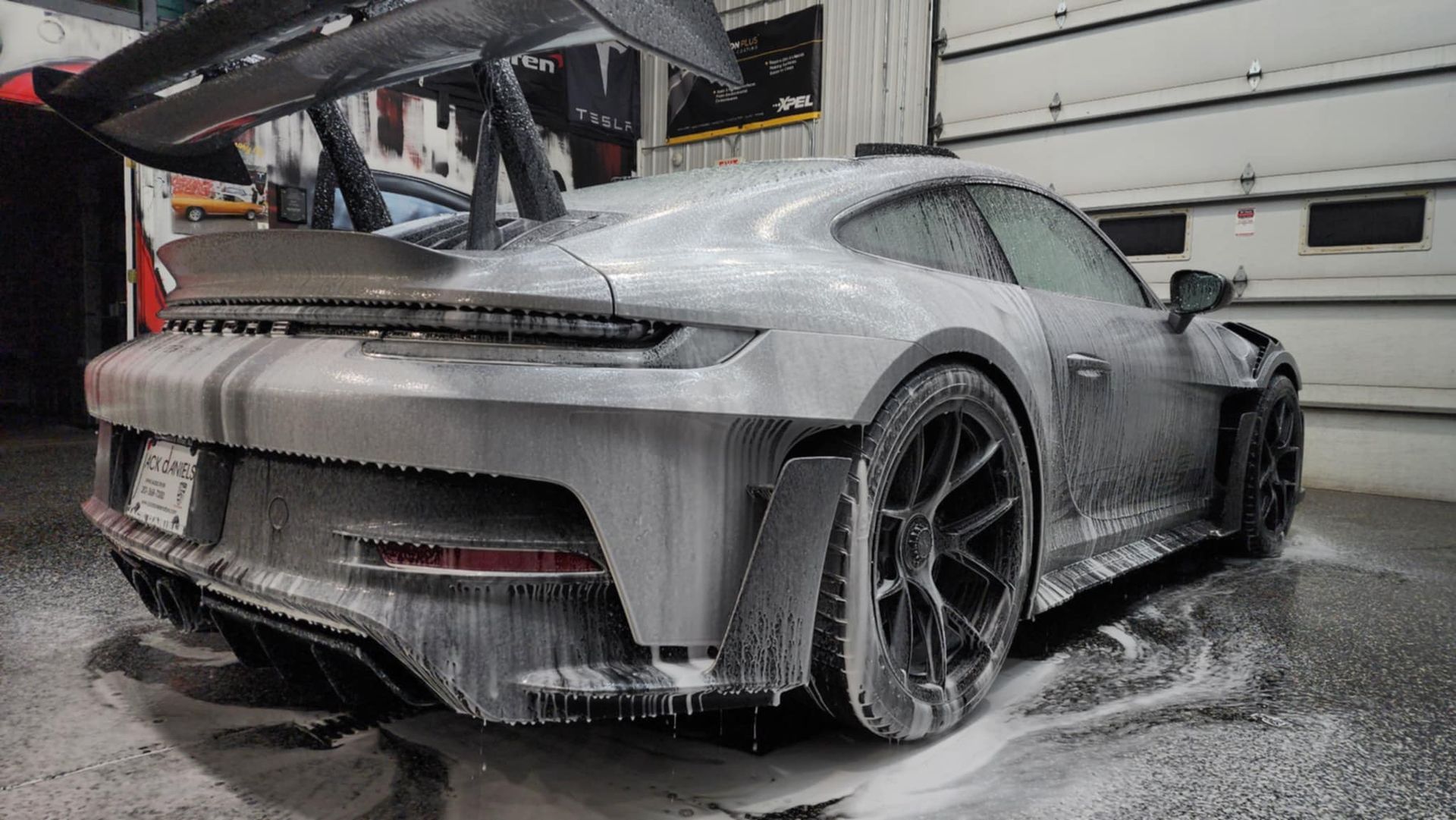
A foam cannon (or foam lance) attaches to your pressure washer and creates a thick blanket of cleaning solution that clings to vertical surfaces. This isn't just for aesthetics. The foam serves as a critical element of ceramic coating maintenance:
Dwell time for chemical action:
The thick foam layer stays in contact with the surface for 3-5 minutes, allowing pH-neutral car shampoo to break down road film, bug splatter, and other bonded contaminants through chemical action rather than mechanical scrubbing.
Lubrication layer:
When you do make contact with a wash mitt, the remaining foam provides additional lubrication, further reducing friction.
Why pH-neutral matters:
Ceramic coatings are resistant to chemicals, but harsh alkaline or acidic cleaners can degrade the hydrophobic top layer over time. A pH-neutral formula (typically pH 6-8) cleans effectively while respecting the coating's chemical structure.
At Olson's Custom Detailing Inc., we've tested dozens of wash solutions and exclusively use pH-neutral, SiO2-infused maintenance sprays and shampoos that actually enhance the coating's performance with each wash.
Step 3: The Two-Bucket Method: How to Safely Agitate Remaining Film
Even after foam application, some contaminants require gentle physical contact for removal. The two-bucket method is the professional standard:
Bucket #1 (Wash):
Filled with fresh water and pH-neutral car shampoo
Bucket #2 (Rinse): Filled with clean water only
The process:
Dip your clean microfiber wash mitt into the soap bucket, gently wash a 2x2 foot section using straight-line motions (never circles), then rinse the mitt thoroughly in the rinse bucket before returning to the soap bucket. This prevents contaminated water from re-entering your wash solution.
Mitt selection matters: Use a high-quality microfiber mitt with long, soft fibers. Never use sponges, brushes, or old towels. The ceramic coating's smooth surface requires minimal pressure; let the mitt glide across the surface rather than scrubbing.
Work from top to bottom, and use a separate mitt for wheels and lower panels where brake dust and road tar accumulate.
Step 4: The Blow Dry: Using Air Instead of Towels to Prevent Friction
This final step is where ceramic coatings truly shine. Using a dedicated car dryer or leaf blower, you can achieve a completely spot-free, friction-free dry:
Start at the top:
Blow water off the roof, hood, and trunk, allowing it to cascade down the sides
Focus on crevices:
Direct air into door jambs, around mirrors, and panel gaps where water pools
Watch the water sheet:
The coating's hydrophobicity causes water to sheet off in large sections rather than beading. It's satisfying to watch and incredibly effective.
If you must use a drying towel, choose a premium microfiber drying towel with deep pile and use only gentle patting motions. Never drag or wipe with pressure. However, air drying eliminates even this minimal friction, making it the preferred method for long-term coating preservation.
Common Pitfalls to Avoid
Even with the best intentions, several common mistakes can compromise your ceramic coating's performance and longevity.
Using "Strip" Soaps or Heavy Degreasers
Some car wash products are formulated to remove old wax and sealants. These "strip" shampoos typically contain strong alkaline cleaners or solvents. While they won't remove a properly cured ceramic coating in a single wash, repeated use will degrade the hydrophobic top layer and reduce gloss.
Similarly, avoid household degreasers, dish soap, and all-purpose cleaners on ceramic-coated surfaces. If you need stronger cleaning power for specific contaminants (like tar or tree sap), use dedicated spot removers and immediately follow with a pH-neutral wash.
Washing in Direct Sunlight (Water Spotting)
When you wash in direct sunlight or on hot panels, water evaporates before you can rinse it away, leaving behind mineral deposits. These water spots can bond to the coating surface and become surprisingly difficult to remove.
Best practices:
- Wash in the shade or during cooler parts of the day (early morning or evening)
- If the panels are hot to the touch, wait for them to cool
- Work in sections and rinse frequently to prevent soap or water from drying on the surface
Water spotting is particularly problematic in areas with hard water. The mineral content creates more visible spotting on dark-colored vehicles.
Using the "Red Tip" (0-Degree) Nozzle (Potential for Coating and Paint Damage)
This deserves repeating because it's the single most damaging mistake we see: never use the red zero-degree nozzle on your vehicle.
This nozzle concentrates water into a pinpoint stream with enough force to:
- Strip ceramic coatings on contact
- Cut through clear coat
- Damage paint down to the primer layer
- Force water behind trim pieces and into door seals
- Crack windshields and headlight lenses
The red tip is designed for industrial cleaning of concrete and heavy equipment. It has no place in automotive detailing. If your pressure washer came with a red nozzle, remove it from your nozzle set entirely to prevent accidental use.
Professional Maintenance at Olson's Custom Detailing Inc.
While pressure washing your ceramic-coated vehicle at home is absolutely achievable, we understand that not everyone has the time, equipment, or desire to DIY their car care.
Our Maintenance Wash Services for Those Who Don't Want to DIY
Olson's Custom Detailing Inc. offers comprehensive maintenance wash services specifically designed for ceramic-coated vehicles. Our maintenance packages include:
- Professional-grade pressure washing using calibrated equipment
- pH-neutral, SiO2-infused wash chemistry that enhances your coating
- Multi-stage decontamination process for wheels, wheel wells, and paint
- Complete air-drying to prevent water spotting and friction damage
- Optional coating boost application to refresh hydrophobicity
We recommend maintenance washes every 2-4 weeks depending on your driving conditions and storage situation. Regular professional maintenance keeps your coating performing at its peak and allows us to identify any areas requiring attention before they become problems.
Your Ceramic Coating Warranty and Check-Up Services
Every ceramic coating we apply includes a comprehensive warranty that requires periodic maintenance to remain valid. Our check-up services ensure your coating continues to meet performance standards:
6-Month Check-Up: Visual inspection, gloss measurement, and water behavior testing
Annual Inspection: Full decontamination, coating thickness assessment, and any necessary touch-up work.
Warranty Documentation: We maintain detailed records of all maintenance and inspections for warranty purposes.
These services aren't just about maintaining warranty coverage. They're about ensuring you get the maximum return on your ceramic coating investment. A properly maintained coating can last 3-5 years or longer, while a neglected coating may fail in less than a year.
The Olson's Standard: Not All Pressure Washers Are Created Equal
Pro-Tip Sidebar: At Olson's Custom Detailing Inc., we see many clients use "industrial" pressure washers designed for driveways (3,000+ PSI). This can actually force water under the edges of a coating or trim. We always recommend an electric pressure washer tailored for automotive use.
The ideal specifications for a pressure washer for ceramic-coated vehicles:
- PSI range: 1,300-1,900 PSI with adjustable pressure control
- GPM (Gallons Per Minute): 1.5-2.0 GPM for adequate water flow
- Electric vs. Gas: Electric models offer more consistent pressure and are quieter, perfect for residential use
- Foam cannon compatibility: Ensure your pressure washer can accommodate foam cannon attachments
When selecting a pressure washer, resist the temptation to go bigger and more powerful. More PSI doesn't mean a cleaner car. It means greater risk of damage. The automotive detailing industry has optimized around 1,500 PSI for good reason: it's the sweet spot for effective cleaning without compromising delicate surfaces.
Protecting Your Investment Through Proper Care
Your ceramic coating represents a significant investment in your vehicle's appearance and protection. Understanding how to pressure wash safely (respecting the curing window, using proper PSI settings, choosing the right nozzle, and following a systematic wash process) ensures that coating delivers years of effortless maintenance and stunning gloss.
AtOlson's Custom Detailing Inc., we're committed to not just applying the finest ceramic coatings available, but also educating our clients on proper maintenance techniques. Whether you choose to maintain your coating yourself or trust us with professional maintenance services, the goal remains the same: preserving that just-detailed appearance for as long as possible.
Ready to experience the difference that professional ceramic coating application and maintenance can make?
Contact Olson's Custom Detailing Inc. today to schedule your coating application or maintenance service. Your vehicle deserves the Olson's Standard.