If your car's ceramic coating has stopped beading water or lost that glossy, slick feel, there's a good chance it's clogged. This is one of the most common and most misunderstood ceramic coating problems, and the good news is that in most cases, you can restore your coating's performance without starting over from scratch.
Here's what ceramic coating clogging actually means, what causes it, and how to fix it step by step.
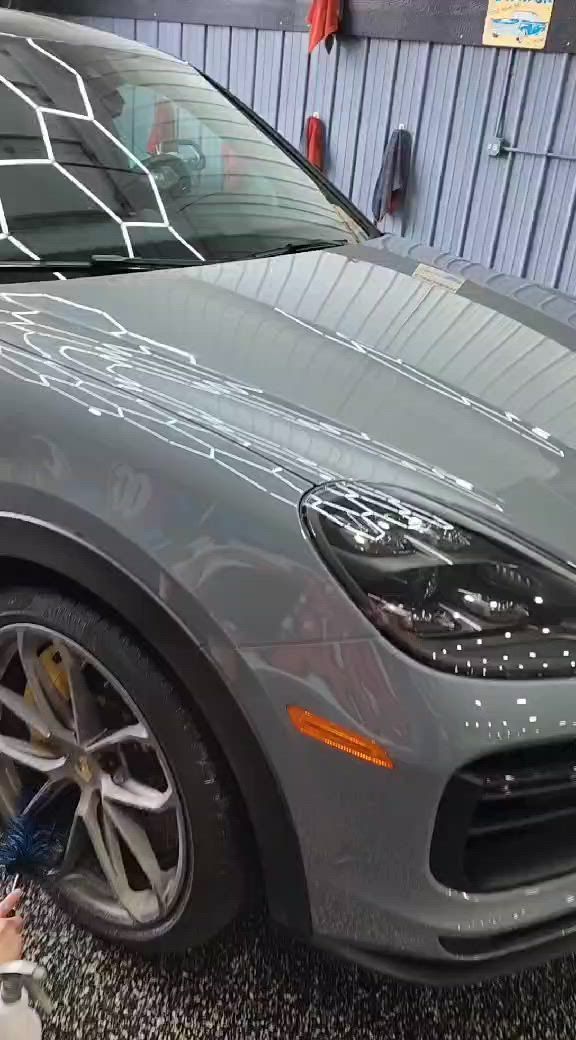
What Is Ceramic Coating Clogging?
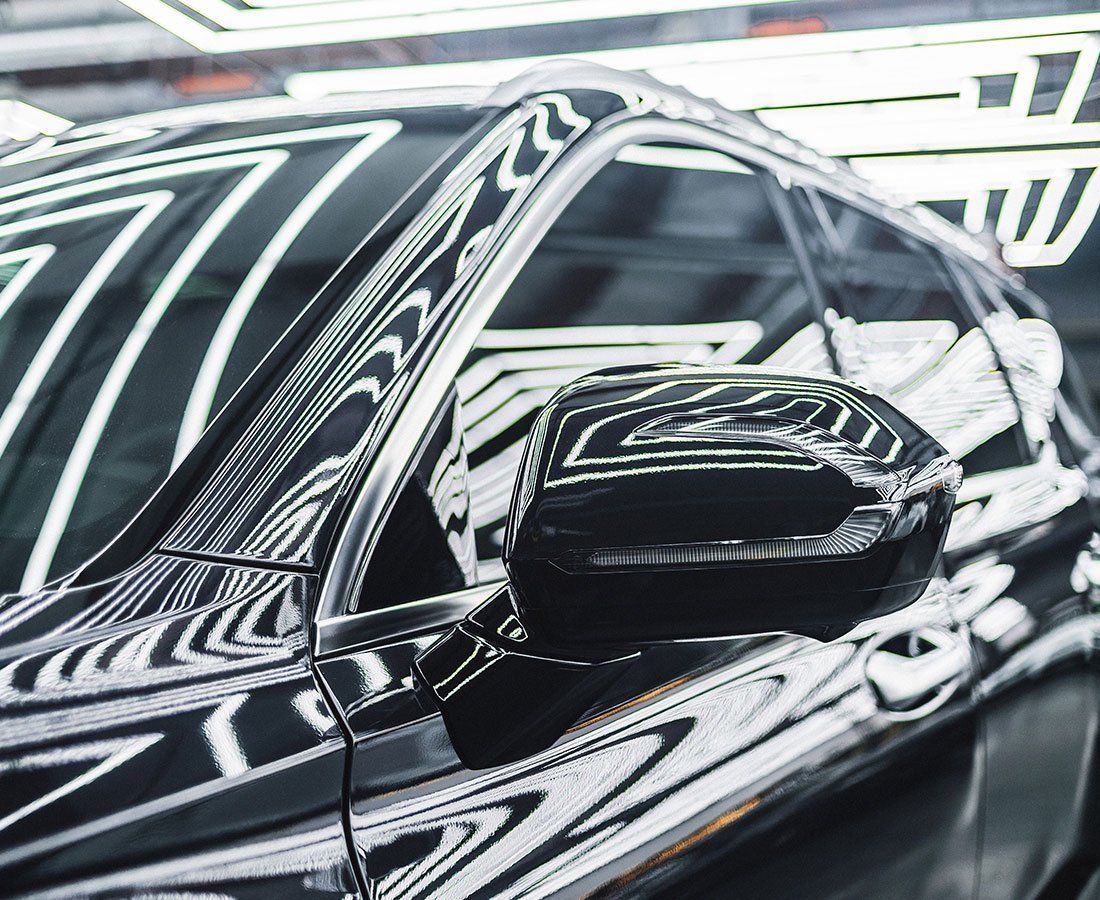
Ceramic coatings work by forming a semi-permanent hydrophobic layer over your paint. That layer is full of microscopic pores, and over time, those pores can fill with contaminants like dirt, brake dust, iron fallout, mineral deposits, and sticky residues like tar and tree sap.
When enough of those pores get blocked, the coating can't do its job. Water stops sheeting off the surface. The paint feels rough to the touch. The deep gloss starts to look flat. This is what detailers mean when they say a coating is "clogged."
The coating itself may still be bonded to the paint. It's just buried under a layer of contamination that's preventing it from performing.
What Causes Ceramic Coating to Clog?
Surface contaminants. Brake dust is one of the worst offenders. It's metallic, it's hot when it lands on your car, and it bonds to the coating quickly. Mineral deposits from hard water leave behind calcium and silica buildup. Road grime, bird droppings, and tree sap all contribute to surface contamination that gradually suffocates the coating's hydrophobic effect.
Improper washing techniques. Automatic car washes with rotating brushes trap and drag contaminants across the coating's surface, grinding debris into the pores rather than rinsing them away. Using the wrong soaps, especially anything with wax or fillers, can leave residue that blocks the coating. Even washing in direct sunlight causes soap to dry on the surface before it's properly rinsed, leaving behind a film.
Lack of regular maintenance. Ceramic coatings aren't maintenance-free. Without regular washes and periodic booster applications, contaminants accumulate unchecked. The longer contamination sits on the coating, the harder it becomes to remove, and the more it degrades performance over time.
How to Fix a Clogged Ceramic Coating: Step by Step
You don't need to strip or reapply the coating to fix most clogging problems. Follow these steps in order.
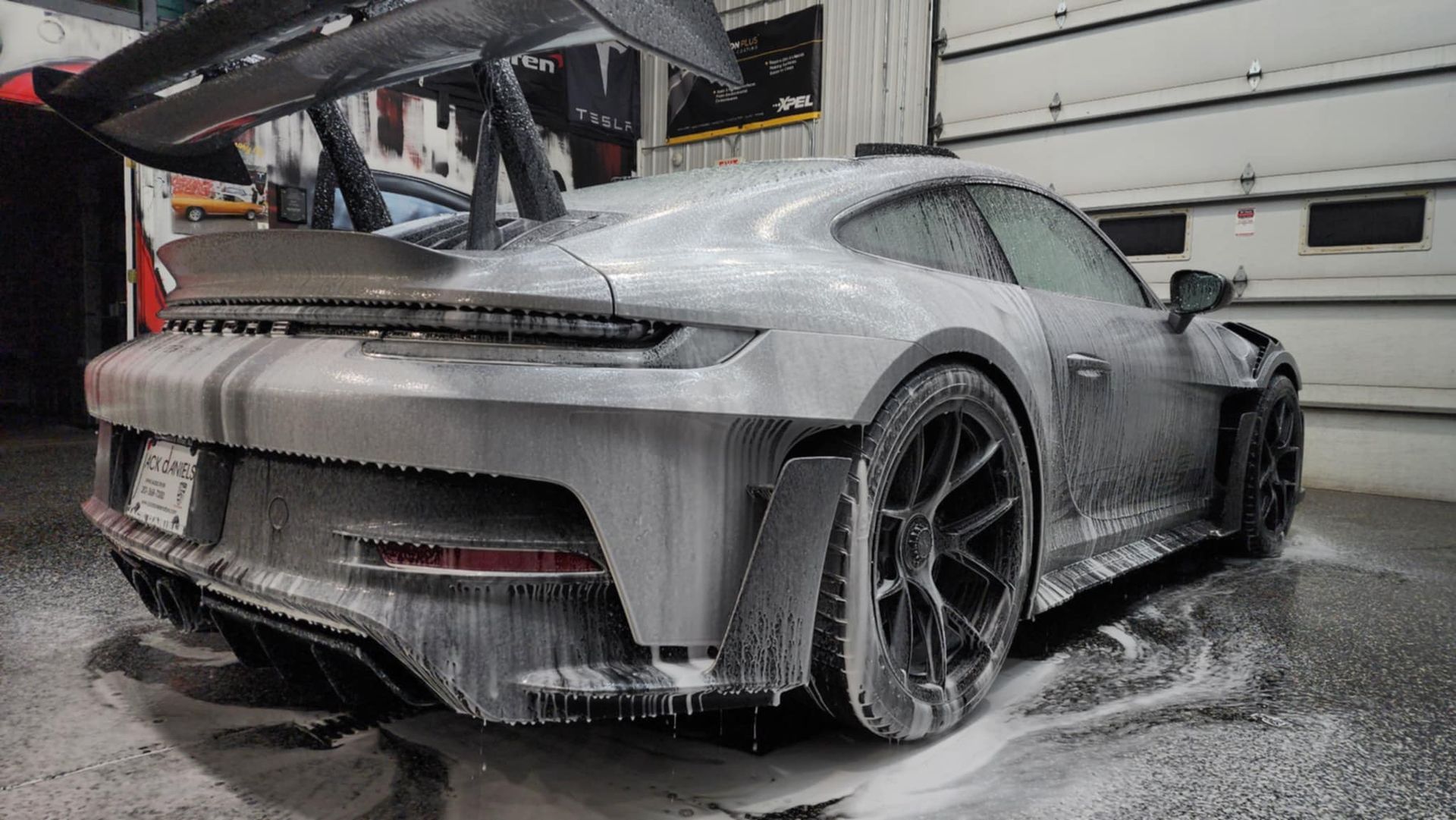
Step 1: Thorough decontamination wash. Start with a proper two-bucket or foam cannon wash using a pH-neutral ceramic-safe shampoo. This removes loose surface debris and prepares the coating for deeper decontamination. Avoid dish soaps or all-purpose cleaners, as they're too harsh and will strip any remaining protective effect.
Step 2: Iron fallout removal. Apply an iron fallout remover to the entire vehicle and let it dwell according to the product's directions. You'll typically see it turn purple or red as it reacts with embedded metallic particles, which is the iron contamination being dissolved. Rinse thoroughly. This step is essential if your car is driven near industrial areas, construction zones, or heavy traffic.
Step 3: Tar and sap removal. Use a dedicated tar and sap remover on any sticky residues that survived the wash. Apply with a clean microfiber applicator, let it break down the residue, and wipe gently. Don't scrub, as these products do the work chemically, not mechanically.
Step 4: Clay bar treatment. If the surface still feels rough or gritty after washing and chemical decontamination, it's time for a clay bar. Use a quality clay bar with plenty of lubrication and work in small sections with light pressure. The clay picks up bonded contaminants that chemicals can't dissolve. Wipe the surface clean after each section. When done correctly, your paint should feel smooth as glass.
Step 5: Apply a ceramic maintenance spray or booster. Once the surface is fully decontaminated, apply a ceramic coating maintenance spray or SiO2 booster product. This recharges the hydrophobic properties of the existing coating, restores that slick feel, and brings back the depth of gloss. This step is what makes the water bead again.
Preventing Ceramic Coating from Clogging in the Future
Restoring a clogged coating is satisfying, but keeping it clean in the first place is much easier. A few habits go a long way:
Wash your car every one to two weeks using pH-neutral, ceramic-safe products and the two-bucket method. Avoid touchless automatic washes when possible, and never use a brush-style automatic wash on a coated vehicle. Apply a ceramic maintenance booster spray every one to three months, depending on how much exposure your vehicle gets. And consider bringing the car to Olson's Custom Detailing for a professional decontamination service every six to twelve months. A trained set of hands will catch contamination and early performance degradation before it becomes a bigger issue.


When to Call the Professionals
Sometimes DIY decontamination doesn't fully solve the problem. If your coating still feels rough or shows no water beading after a complete decontamination process, the contamination may have bonded too deeply for consumer-grade products to address. If the coating's gloss never returns, or if you notice surface marring, water spots that won't lift, or a streaky appearance that persists after washing, it's time to bring the car in.
At Olson's Custom Detailing, we offer professional ceramic coating restoration services that go beyond what's possible at home. Using professional-grade decontamination products, machine polishing where necessary, and coating booster applications, we can restore your coating's performance without a full reapplication in many cases, saving you time and money.
If the coating is beyond restoration, we'll tell you honestly and walk you through your options for a fresh application.
Frequently Asked Questions
What does ceramic coating clogging mean?
Ceramic coating clogging happens when contaminants like dirt, brake dust, mineral deposits, and sticky residues fill the microscopic pores of the coating. When those pores are blocked, the coating can no longer repel water or maintain its slick surface, which is why you see reduced water beading and a dull appearance.
Can a clogged ceramic coating be fixed without reapplication?
In most cases, yes. A full decontamination process, starting with a pH-neutral wash and followed by iron fallout removal, tar and sap removal, and a clay bar treatment, can clear the clogged pores and restore performance. Finishing with a ceramic maintenance booster spray brings back the hydrophobic effect. Reapplication is only necessary if the coating itself has been mechanically damaged or has fully degraded.
How often should you maintain a ceramic coating?
Wash every one to two weeks with ceramic-safe products, apply a maintenance booster spray every one to three months, and schedule a professional decontamination service every six to twelve months. How often you need each step depends on how much the car is driven and the conditions it's exposed to.
Will professional auto detailing restore my coating's hydrophobic effect?
Yes, in most cases. A professional decontamination service removes contamination that consumer products can't always reach, and a professional-grade booster application recharges the coating's water-repelling properties. At Olson's Custom Detailing, we offer ceramic coating restoration as a standalone service, so you don't need a full detail to get your coating performing again.