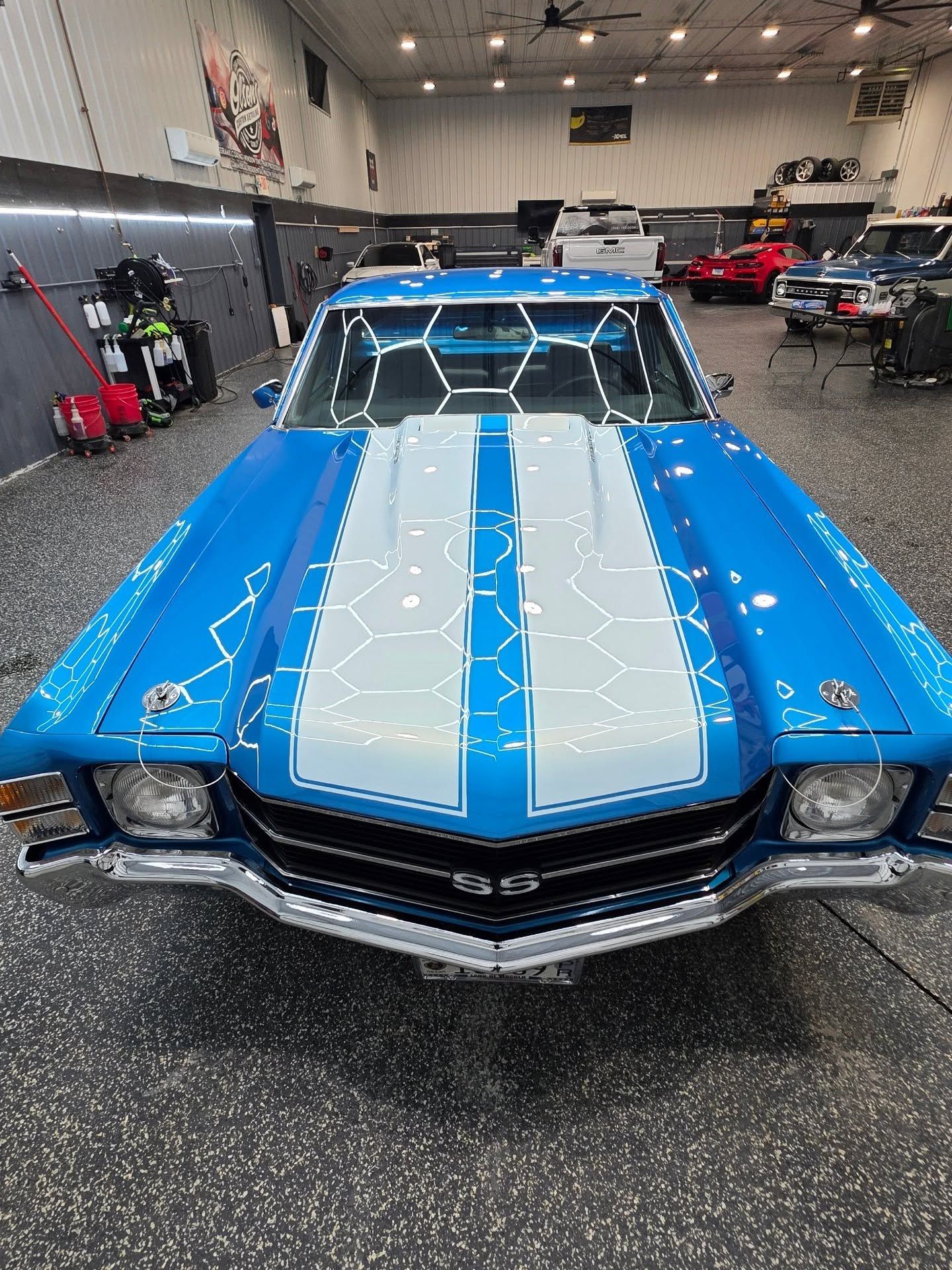
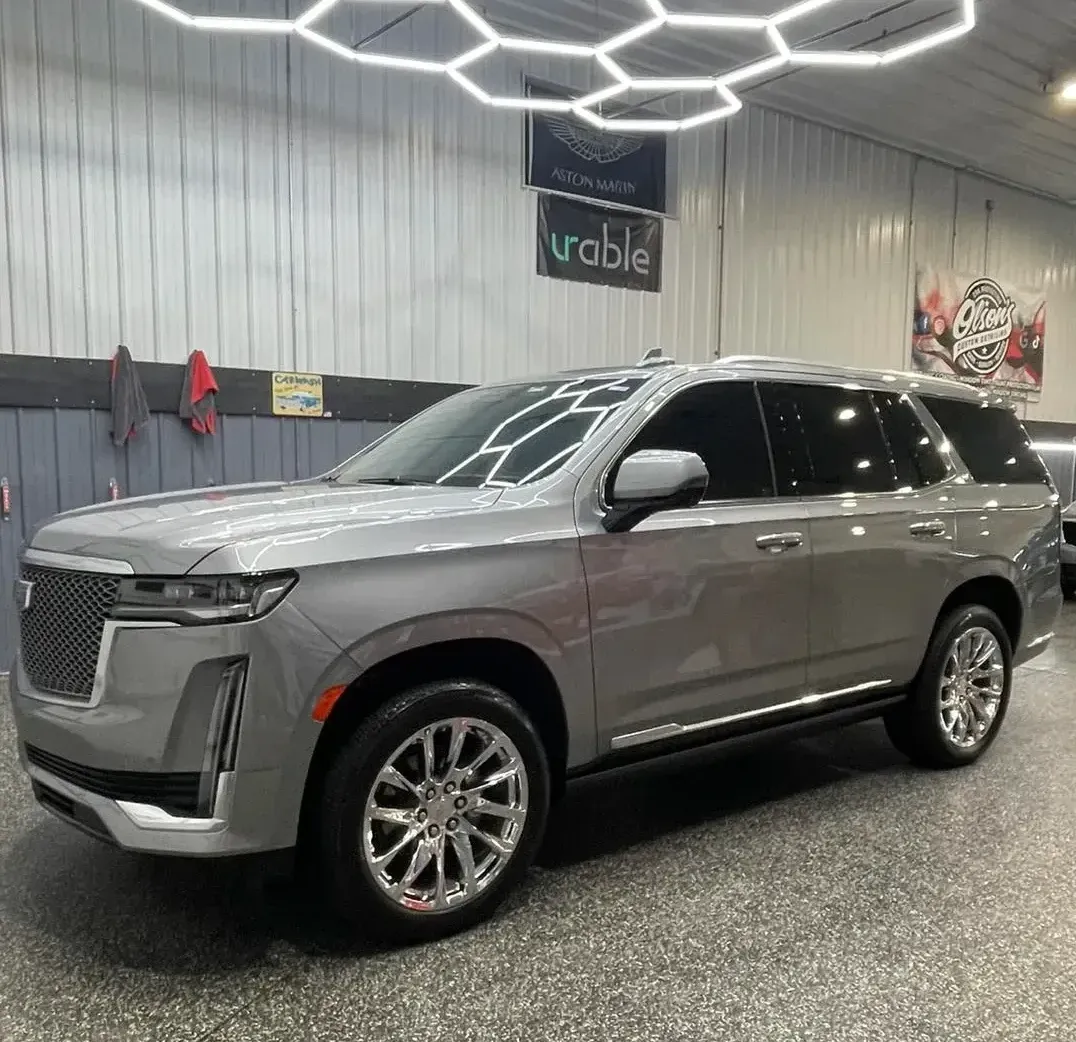
Paint protection film does not change your car's color. It can change your gloss, and by a published amount you get to choose. XPEL lists its Ultimate Plus film above 90 gloss units and its Stealth film at 23 gloss units, so the film you pick sets the finish, not the paint underneath it.
That split matters because color and gloss are two different physical properties, and almost every article on this subject blends them into one vague question about how your car will look. Color lives in the pigment layer of your paint, several layers below anything we apply. Gloss is a surface property, and film does become your new surface. Understanding which one is actually at risk is the difference between being delighted with your XPEL paint protection film installation and being quietly disappointed six months later.
PPF Does Not Change Your Paint Color
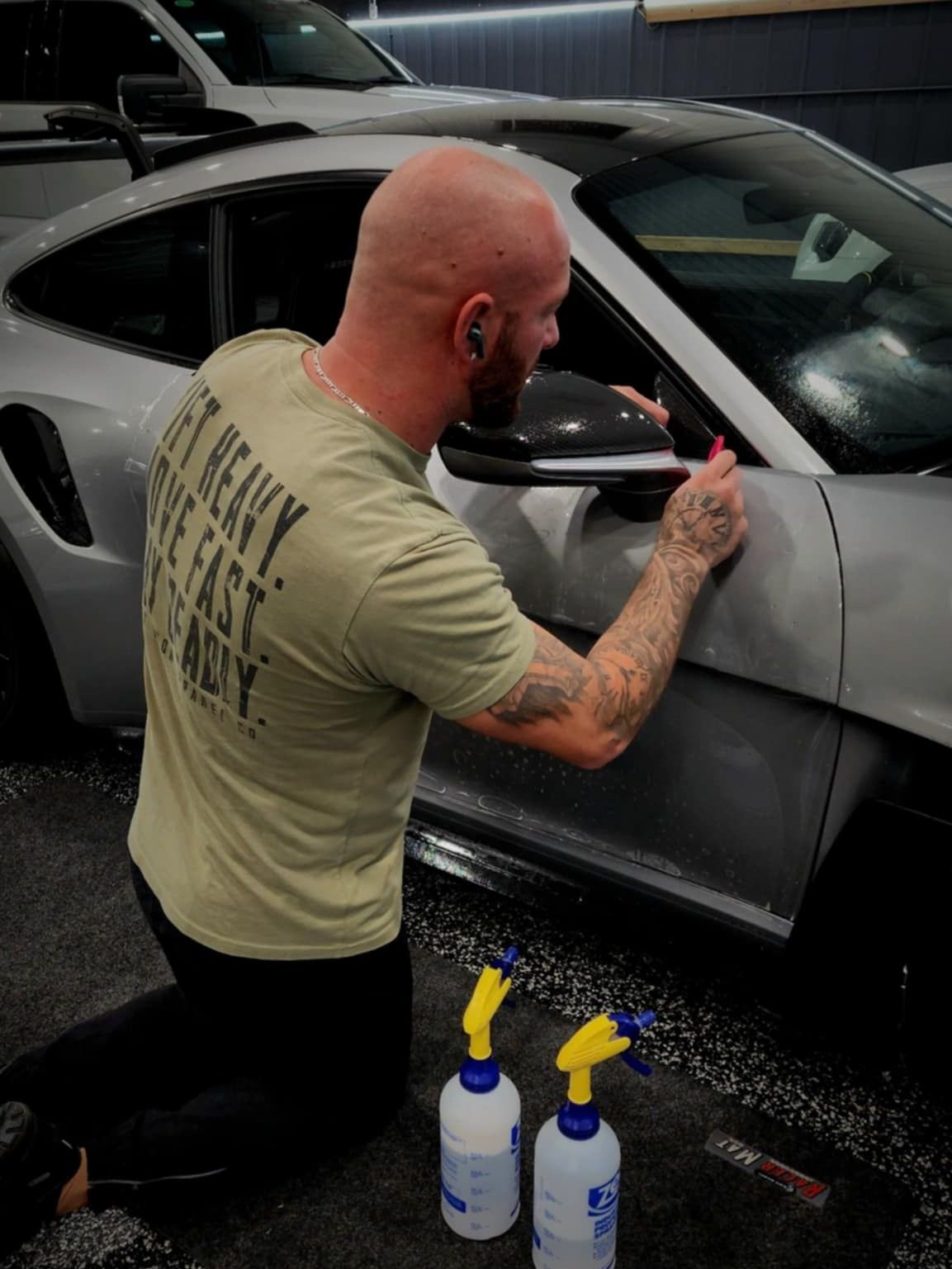
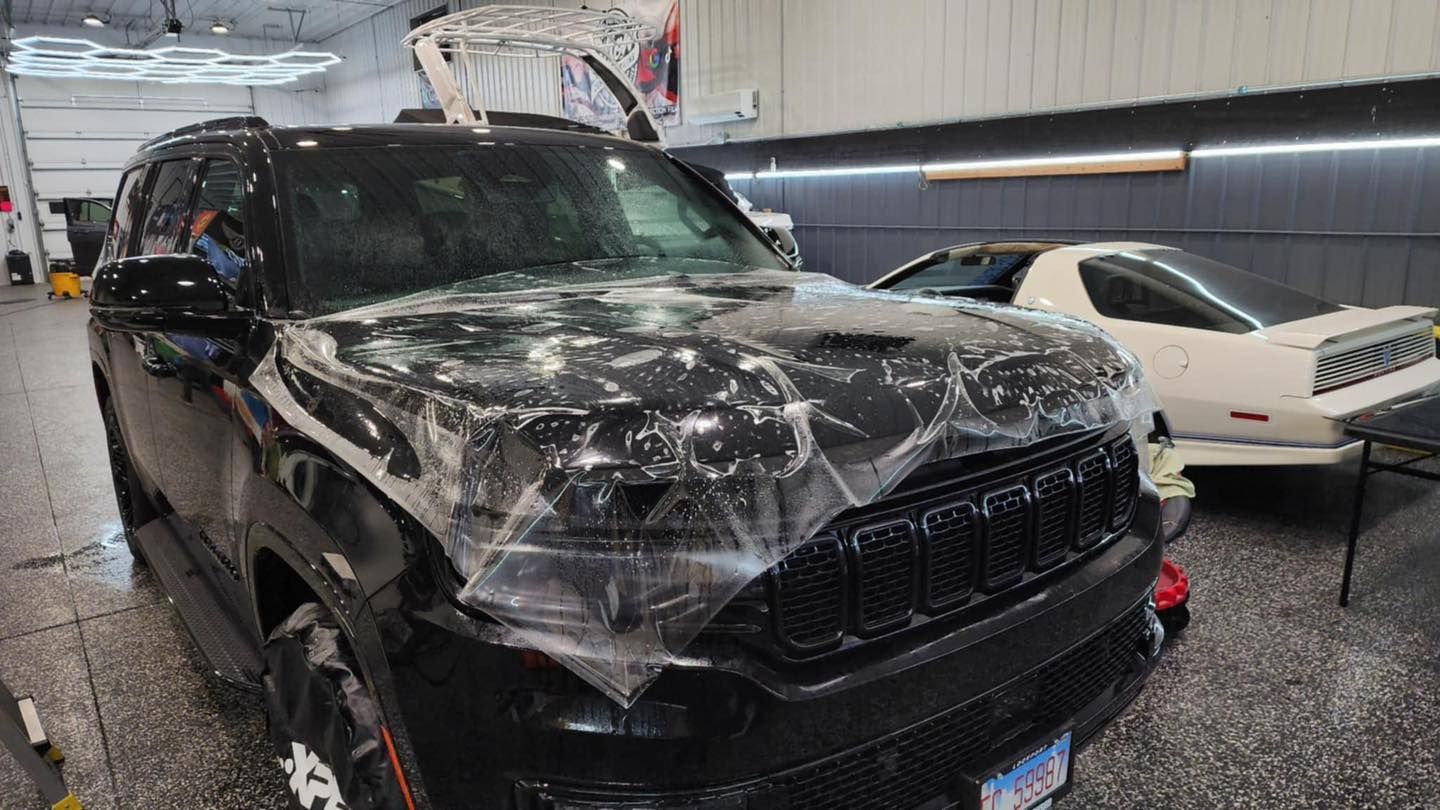
Your car's color comes from pigment in the base coat, under the factory clear coat. Paint protection film is a urethane layer applied on top of that clear coat. It never touches the pigment and never alters it. When the film comes off years later, the color underneath is the color that left the factory.
What film does is sit in the light path. Premium films are optically clear, so light passes through, reflects off your paint, and passes back out with the pigment reading as it should. The film is a window, not a filter.
The exception is deliberate. Colored, matte, satin, and carbon fiber films exist specifically to change appearance, and that is a design choice you make on purpose. If a clear film is changing your color, something is wrong with the film or the installation, not with the concept.
PPF Does Change Gloss, and the Number Is Published
Gloss is not a matter of opinion. It is a measured quantity. The industry standard test method is ASTM D523, which measures specular gloss by firing light at a surface at a fixed angle and reading how much reflects back. For automotive paint and film, the 60-degree geometry is the one that matters, and the result is reported in gloss units, abbreviated GU. Higher means shinier.
This is where most of the advice online falls apart. You will read that film is virtually invisible, or that it preserves 80 to 95 percent of gloss, or that it boosts luster by 30 percent. None of those numbers trace back to a test. The manufacturer numbers do.
XPEL is direct about this. In its guidance on applying film to chrome, aluminum and brushed metal, XPEL notes that film will in most cases add a slight gloss, and recommends satin Stealth when you want to keep a low sheen. That is the manufacturer saying film changes gloss, and that the fix is choosing a different film.
Choosing the Direction of the Change
As an exclusive XPEL installation shop, we work with three film lines, and each lands somewhere different on the gloss scale. Our guide to the types of paint protection film covers how the constructions differ.
XPEL Ultimate Plus, Published Above 90 GU
Ultimate Plus is the crystal-clear, gloss-finish film and the default choice for anyone whose answer to this question is do not change anything. Its technical data sheet lists gloss above 90 GU at 60 degrees and a nominal thickness without the release liner of 193 micrometres, roughly 7.60 mil, within a 10 percent tolerance. A mil is one thousandth of an inch, so this is a substantial physical barrier that still reads as glass.
On a new car with healthy clear coat, Ultimate Plus reads as no visible change. On a car whose finish has already dulled from a few Illinois winters, it can read glossier than the paint beside it, because the film surface is newer than the clear coat it covers.
XPEL Stealth, Published at 23 GU
Stealth is a satin finish film built to give the appearance of a flat factory finish, and its data sheet lists gloss at 23 GU at 60 degrees with a nominal thickness of 207.01 micrometres, about 8.15 mil. Set those two numbers side by side, and the choice becomes concrete rather than aesthetic guesswork. Above 90 GU keeps your gloss. 23 GU replaces it with satin.
This is the one case where film transforms how your car looks, and that is the point of it. Stealth turns a gloss finish satin without touching the paint underneath, so the change is fully reversible. Remove the film and the original gloss is still there.
XPEL Armor for Work Trucks and Off Road Use
Armor is the heavy-duty line, built for commercial vehicles, work trucks, and off-road use. It is specified for abrasion resistance rather than optical subtlety, so it belongs on a job site truck, not a show car hood.
What Actually Makes a Car Look Worse After Film
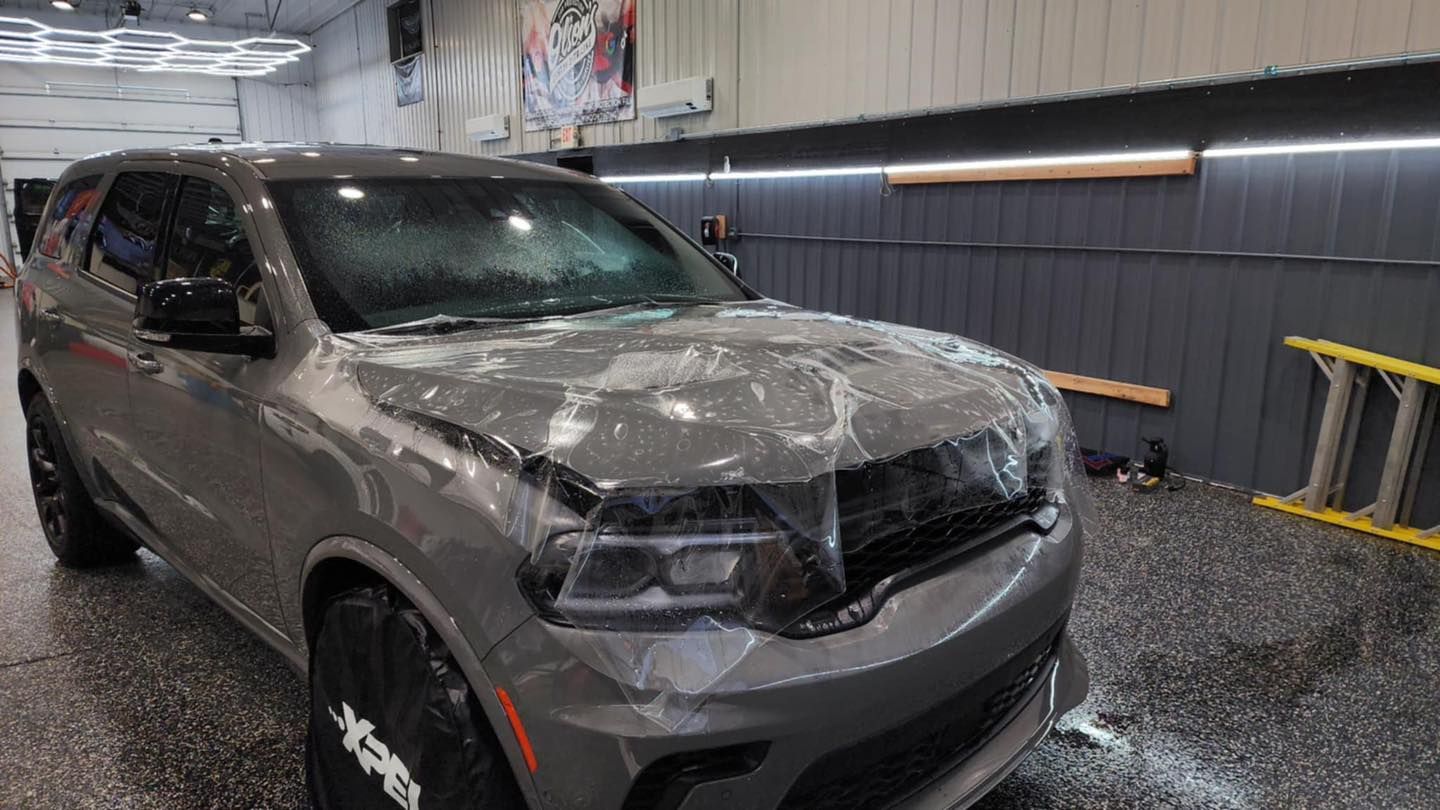
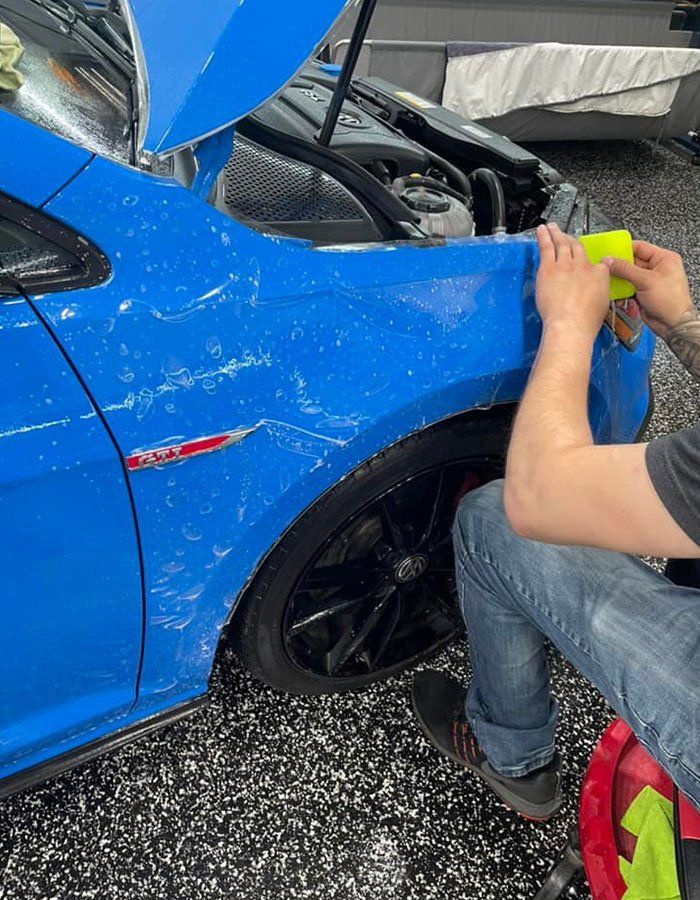
Here is the part most shops will not tell you. Film does not hide defects. It seals them. Urethane conforms to whatever it is laid over, creating a smooth top layer above an uneven base. Swirl marks, orange peel, and light scratches do not disappear. They often become more obvious, because the flat film surface gives your eye a reference point it did not have before.
The consequence is expensive. If a car goes under film with swirls in the clear coat, those swirls are locked under roughly 8 mil of urethane, and the only route to fixing them is removing the film. That is why we inspect every vehicle before we apply a package, and why exterior detailing and decontamination come first.
The other common culprits are installation-related:
- Dust or fiber contamination trapped under the film, which is why the working environment matters as much as the installer
- Lift lines and edges that catch light along body panel gaps
- Film stretched too far around a compound curve, which can silver or haze
- Air bubbles, which mostly clear on their own as the film settles with heat
Our rundown of common myths about paint protection film separates the real limitations from the marketing.
Metallic, Pearl and Dark Paint
Metallic and pearl finishes worry people most, because the effect depends on light reaching the flake and bouncing back out. High clarity film preserves that and the sparkle stays. Lower grade films with a slight color cast are where flake goes flat, which is one more reason not to economize on film brand.
Dark paint behaves differently. Black, deep blue, and dark grey show every flaw in both the preparation and the installation. Done correctly, though, dark paint is where film looks most impressive, because a flawless film surface over dark pigment produces a depth that is hard to achieve any other way.
Light colors forgive minor installation imperfections but show edge dirt sooner. The hydrophobic surface on our XPEL packages helps, and a ceramic coating over the film adds a slicker top layer that keeps the car cleaner. See our guide on whether you can apply a coating over paint protection film.
The Gloss Line Between Covered and Uncovered Panels
This is the version of the question that actually surfaces years later, and almost nobody writes about it. If you protect only the front of your vehicle, you now have two different surfaces on one car. The hood, bumper, fenders and mirrors carry film. The doors, roof and trunk carry bare clear coat.
On day one, they match because gloss film is engineered to. The divergence comes later. Filmed panels hold close to their original gloss. Unfilmed panels weather, oxidize slightly, and lose gloss. Three or four years in, some owners notice a subtle line where protection ends, usually along the A pillar or the fender-to-door gap.
There are two honest answers. Accept it as the cost of partial coverage, which is a reasonable trade, or extend coverage. Our Full Front package starts at $1,995 with a one- to two-day turnaround, and Track Pack adds rocker panels at $2,495. Full Vehicle coverage runs from $6,500 over five to seven days and removes the boundary entirely,
Because no unprotected panel is left to diverge. Windshield Protection Film starts at $450. Many shops here only offer front-end options, which is why this problem is so common.
Does Film Yellow or Fade Over Time?
Older films did. That reputation is real, and it is decades old. Modern premium film is a different product, and the strongest evidence is not a marketing claim but a warranty document. XPEL's warranty for Ultimate Plus and Stealth runs 10 years and specifically names yellowing, cracking, blistering, and delaminating as covered defects. A manufacturer does not underwrite a decade of coverage against a failure mode it expects.
What still holds is that cheap film discolors, and no film is permanent. It is a sacrificial layer by design. How long yours holds its clarity depends on care, so read our guidance on how to maintain paint protection film before your first wash, and our overview of the benefits of paint protection film for the broader case.
Why Illinois Roads Widen the Gap Faster
Climate changes the math. Road salt on I-80 and Route 30, winter slush, and the freeze and thaw cycle of a Midwest winter are the conditions that dull unprotected clear coat fastest. In a dry, mild climate, the difference between filmed and unfilmed panels might take six or seven years to show. Around New Lenox, Joliet and Mokena, that timeline compresses.
It cuts the other way too. Those same conditions make the protection more valuable, because the film absorbs salt, grit and chips that would otherwise etch your paint. Our page on PPF installation for Crest Hill drivers covers how local road conditions factor into coverage decisions.
See the Numbers on Your Own Paint
The right answer depends on the car in your driveway and the condition its finish is in today. We have been an exclusive XPEL shop in New Lenox since 2019, and we inspect every vehicle before we quote a package, because the state of your clear coat determines the gloss outcome more than the film does.
Bring it by our New Lenox shop or fill out the quick quote form, and we will tell you honestly what film will and will not change about how your car looks.
Frequently Asked Questions
Will PPF make my car look different right after installation?
With a gloss film like Ultimate Plus, published above 90 GU, it should not. You may notice a slightly deeper, more uniform surface. If you can clearly see film edges or a haze, that points to installation quality rather than the material.
Does PPF make paint look duller?
Clear gloss film does not reduce gloss on its own. Dullness after installation almost always means the paint was not corrected first, so existing swirls and texture got sealed under the film.
Can I go back to gloss after satin film?
Yes. Satin film like Stealth changes the appearance of the surface, not the paint. Professional removal reveals the original gloss finish underneath.
Does film change the color of metallic paint?
No. High clarity film lets light reach the metallic flake and reflect back, so the sparkle is preserved. Only low quality film with a color cast dulls flake.
Do you install film for drivers outside New Lenox?
Yes. Our New Lenox shop at 12546 W Harvey Dr serves Joliet, Mokena, Frankfort, Tinley Park, Homer Glen, Orland Park, Manhattan and Crest Hill. We work by appointment, Monday through Friday, 6:00 AM to 4:00 PM.